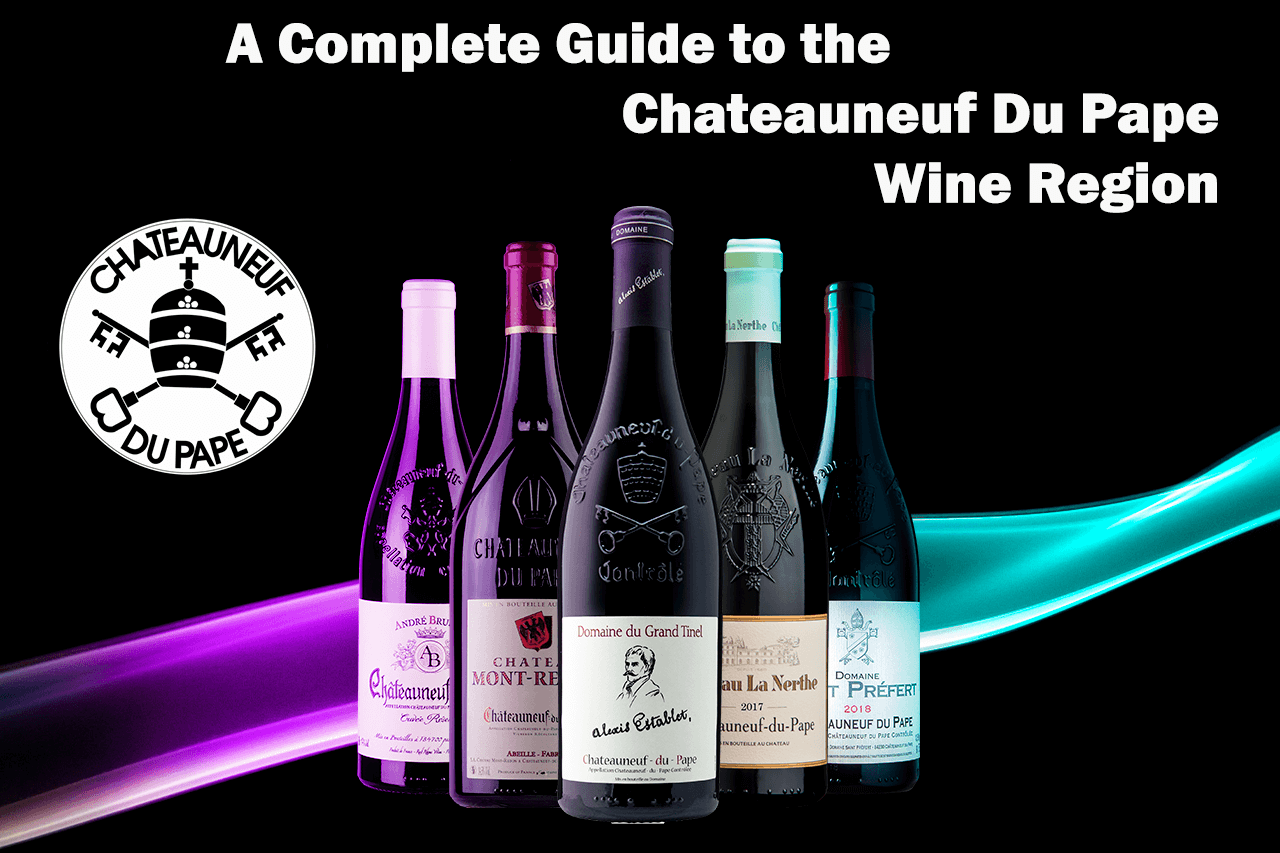
Châteauneuf-du-Pape is one of the most famous names in wine. The region itself is remarkably small, centred around a village (also called Châteauneuf-du-Pape), in the southern half of the Rhône Valley. The landscape here is sun-baked, with stony, sandy soils, dry scrubland, and of course, lots of vines. Its vineyards cover an area of 3,200 hectares or 32km squared, roughly one-tenth the size of Champagne, for example. Châteauneuf-du-Pape is about 20km north of the city of Avignon, which is famous for being the seat of several Catholic Popes, and ties in with the rich history of the region.
For beginners, it can be confusing hearing the name “Châteauneuf-du-Pape” being thrown around. After all, is it a place, or is it a wine? And what’s so special about it? Well, as per the French appellation system, the wine takes its name from the place it is grown, so “Châteauneuf-du-Pape” refers to both. In fact, Châteauneuf-du-Pape was one of the main reasons the appellation system got implemented in the first place. There are a lot of other reasons why the region is so special - read on to discover them.
Things You Need to Know about Châteauneuf-du-Pape
To start things off, these are some of the most burning questions that Google users have about Châteauneuf-du-Pape.
-
What is so special about Châteauneuf-du-Pape?
One of the things that makes Châteauneuf-du-Pape so special is the fact that it was the first region to introduce the idea of “appellations”, protecting the quality of wine, by only sourcing grapes from a small, well-defined area. In 1936, it became the first AOC region in France, forging the path for the rest of the country.
-
What kind of wine is Châteauneuf-du-Pape?
Châteauneuf-du-Pape wine can be red or white, but the region is best known for its Grenache-based red blends. They are generally quite bold, full-bodied reds, with strong red and black fruit flavours supported by earthy and herby notes.
-
What is Châteauneuf-du-Pape made from?
There are 13 grape varieties permitted for Châteauneuf-du-Pape, 9 red varietals and 4 white. However, it is not uncommon to find red blends with some white varietals involved. The 13 grape varietals are Grenache, Syrah, Mourvèdre, Cinsault, Bourboulenc, Roussanne, Counoise, Clairette, Vaccarèse, Muscardin, Picpoul, Terret Noir and Picardan.
-
How many types of Châteauneuf-du-Pape?
The number of types of Châteauneuf-du-Pape is almost uncountable. The thing is, any variation of the 13 permitted grape varietals is fair game. Some blends include all 13 in one bottle! Another thing that makes Châteauneuf-du-Pape wines special is the level of mystery. While 13 grapes are permitted to be used in the appellation's red blends, it is not legally required to include the names on the bottle. Many delicious blends are a secret, known only by the producers.
A Brief History of Châteauneuf du Pape
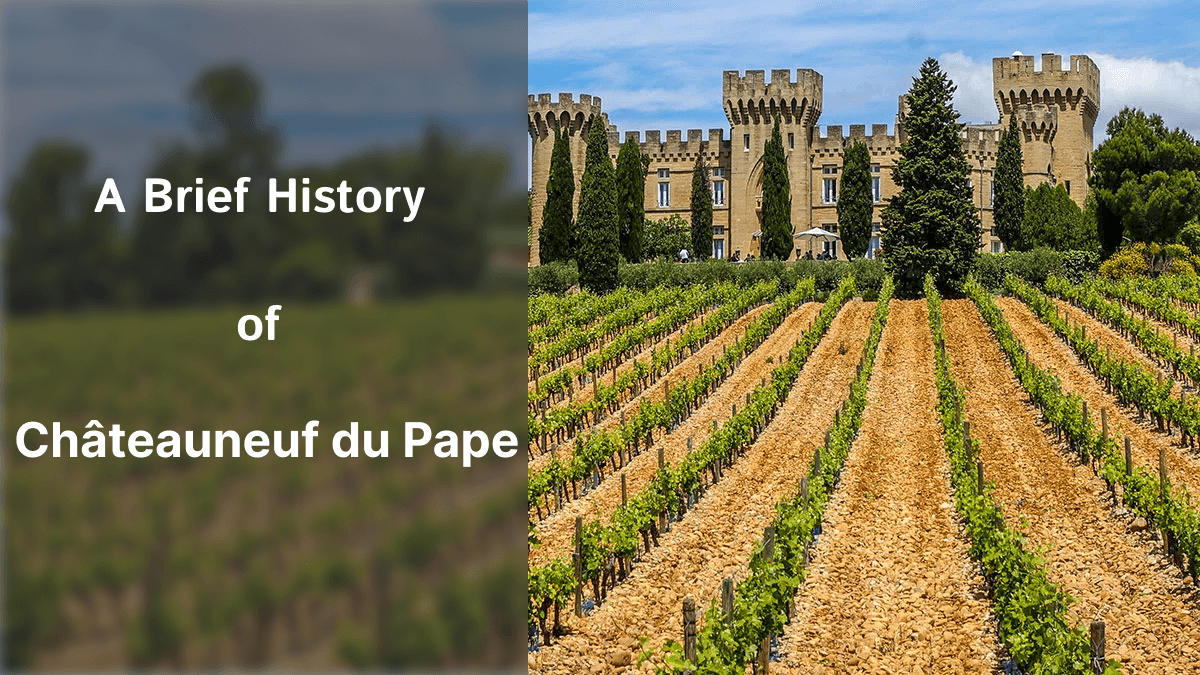
In English, Châteauneuf-du-Pape essentially translates to “The Pope’s New Castle”. The name comes from the 14th century, when Pope John XXII, one of the Popes who lived in Avignon, decided that the small village would be a nice place to live. With the construction of the Pope’s castle, the recorded history of the region begins. Wine-making in the village goes back much further than the construction of the castle, but this is what placed the region on the viticultural map.
Sadly, the castle was abandoned within a century and only a small part of it remains today. However, grape growing remained enormously important in the region. In the 1930s, Baron Le Roy took another small step forward that became a giant leap for Châteauneuf-du-Pape. Baron Le Roy was a viticulturist who married into one of the region’s noble families and spearheaded the development of the “Appellation d'origine contrôlée” or AOC system. Châteauneuf-du-Pape was a prototype, and by defining the area where grapes could be selected from, wine quality vastly improved. France was the first country in Europe to do this, so Châteauneuf-du-Pape was not just the first AOC appellation in France, but the entire world.
The Taste of Chateauneuf du Pape Wine
Châteauneuf-du-Pape is best known for its red wines, which make up about 90% of production. Grenache is the dominant grape by far, and the deciding factor in many of Châteauneuf-du-Pape wine's flavour profiles. They are delicious wines, somehow familiar and comforting. For many, Châteauneuf-du-Pape has served as a gateway to the wine world. If you get a taste for this region’s wines, chances are, you’re going to be hooked.
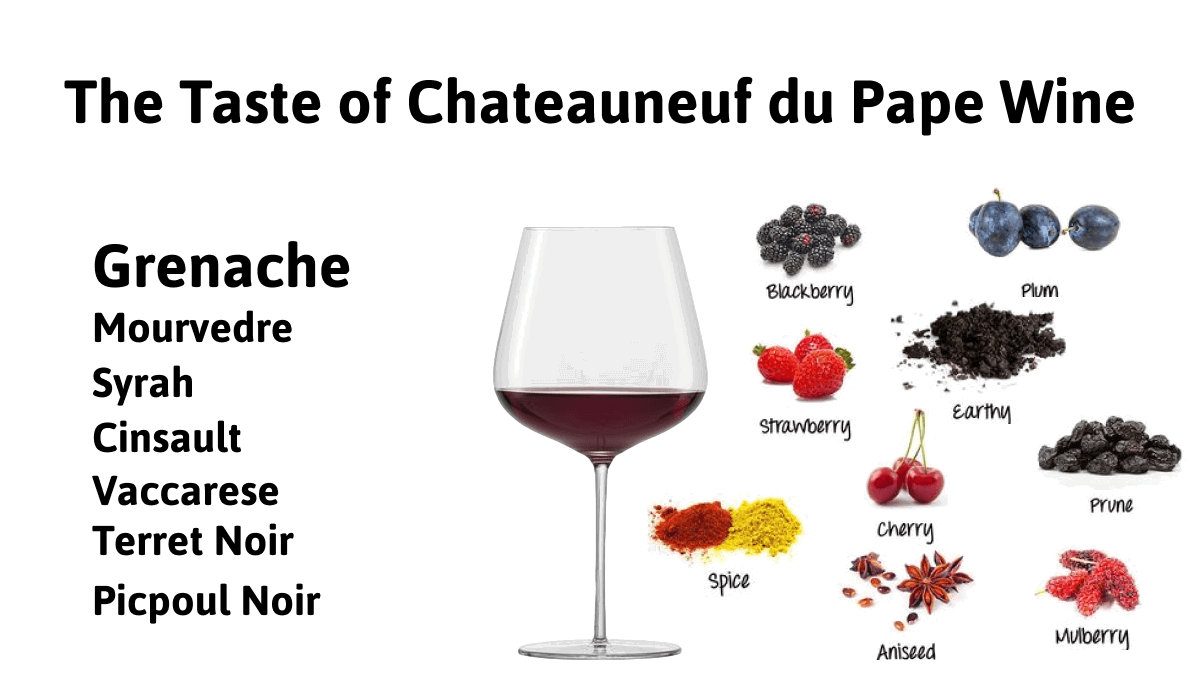
The most common descriptors for the taste of Châteauneuf-du-Pape are ripe red and black fruits, soft spices, a sense of earthy herbaceousness, and an inherently warm and comforting feeling. In short, they are tasty, charming, and approachable.
The French have a name for the earthy, herby side of Châteauneuf-du-Pape wines. They call it “garrigue”, which refers to the low-lying, dry brush and scrubland that you find around Provence. The warm, inviting feel of these wines can also be explained with a French phrase: some attribute it to the “galets roulés” that you can find in the region’s vineyards. Galets Roulés are large, flat pebbles, that are charged with warmth during the day, and pass on that warmth to the vines during the night.
For a small region, there are a variety of different methods at work in Châteauneuf-du-Pape, so there is room for a lot of variety within those classic flavours. White wines are much less famous in Châteauneuf-du-Pape, but they are available. Grenache Blanc is the most popular, a full-bodied white grape, low in acidity. Picpoul is the opposite, with a more lively, juicy taste, and Clairette and Bourboulenc are more floral and aromatic. Even with this information, it can be difficult to know which exact bottles of Châteauneuf-du-Pape, or which wineries to look for. Luckily for you, we’re tackling that next.
Best Selections of Wines and Food Pairings
Alexis Establet with Herby Lamb Racks
Domaine du Grand Tinel has been producing wine in Châteauneuf-du-Pape since 1906, which is quite incredible, given what we have already learned about the region’s history. The “Alexis Establet” cuveé is made from 100% Grenache, sourced from 100-year-old vines. Grenache is relatively low in acidity, so it is beautiful with lean red meats, and this rendition has some wonderful notes of dried fruits and herbs.